
Blog
Emla or Other Numbing Creams: The Professional Questions to Ask Before Treatment

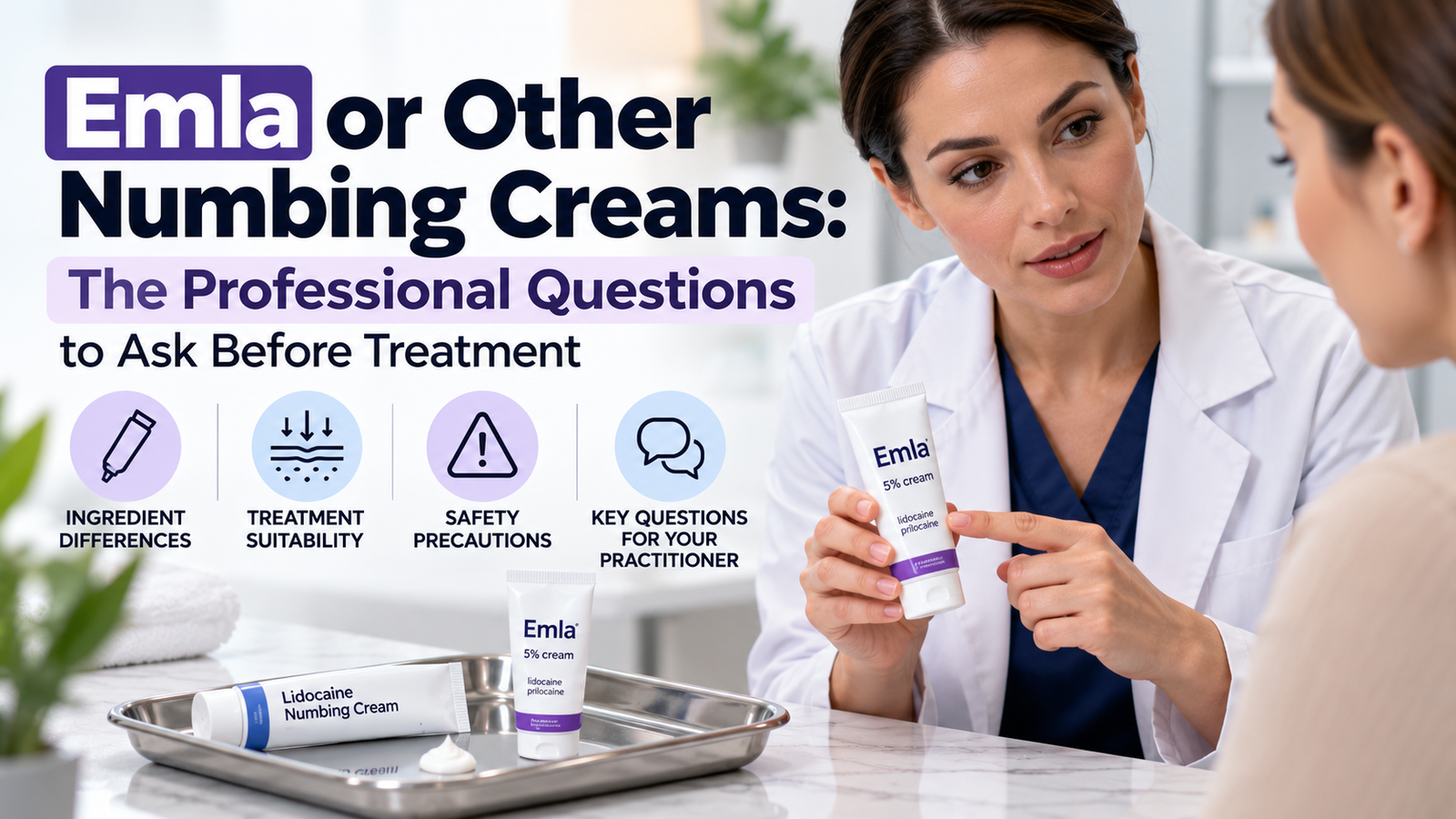
Emla or Other Numbing Creams: The Professional Questions to Ask Before Treatment
Emla or Other Numbing Creams: The Professional Questions are best approached by focusing on the planned procedure, the treatment site and the patient’s health, rather than choosing by product name or concentration alone. We recommend agreeing the product and application plan with the treating professional before using any topical anaesthetic.
Key Takeaways
| Question | Short answer |
|---|---|
| What is the difference between Emla and lidocaine-only creams? | Emla contains lidocaine and prilocaine; a lidocaine-only cream has a different ingredient profile and may have different directions and risks. |
| What numbing cream is stronger than Emla? | No concentration number alone establishes which cream is stronger or suitable. Formulation, site, amount and application time also matter. |
| When should topical numbing be avoided? | Do not use a cream on a site or skin condition unless its instructions and the treating professional permit it. |
| Does Emla actually work? | It can reduce sensation at the skin surface for suitable procedures, but it does not guarantee a pain-free treatment. |
| Should numbing cream be covered? | Use an occlusive dressing only when the product directions or clinician call for one. |
| What if too much cream has been applied? | Remove it and contact a clinician or poison advice service. Seek emergency care for severe symptoms. |
What distinguishes Emla from lidocaine-only creams
Emla contains two local anaesthetics, lidocaine and prilocaine, while a lidocaine-only cream contains lidocaine as its active anaesthetic. The Emla patient information leaflet describes its specific formulation and use, and is a useful reference when discussing that product with a clinician.
These products are not interchangeable simply because both numb skin. Their ingredients, directions and risk profiles can differ, so instructions for one cream should not be transferred to another.
A higher stated concentration does not automatically mean a cream is stronger or a better choice. Formulation, application site, amount used and time on the skin all affect how a topical anaesthetic is used and how much may be absorbed.
There is no universal answer to the question of what numbing cream is stronger than Emla. Compare the product with the procedure and patient, then follow that product’s own leaflet and the treating professional’s instructions.
Decide whether numbing is appropriate for the procedure and site
Ask the treating professional whether topical numbing is needed for the planned procedure. The answer depends on the treatment, how deeply it affects tissue and the area involved.
Topical anaesthetics may be considered for some procedures involving the skin surface, such as certain injections, microneedling or superficial laser treatments. They numb the area where applied, but do not reliably block deeper pain, pressure or every sensation associated with a procedure.
Emla can work when it is used for an appropriate purpose and according to its directions, but it does not make every procedure painless. The practitioner should explain what sensations to expect and whether another pain-control approach is more suitable.
Distinguish intact skin from skin that is broken, irritated or otherwise unsuitable. Do not apply a cream to a site unless the specific product instructions and treating professional permit it.
Facial, genital and other sensitive sites need a procedure-specific decision. A product intended for intact skin is not automatically suitable for mucous membranes or other areas, and genital use, including use for sexual-health concerns, should be discussed with a clinician rather than improvised.
Screen for patient-specific risks before application
Before recommending a cream, ask about past reactions or allergies to local anaesthetics and to other ingredients in the product. A history of rash, swelling, breathing difficulty or another serious reaction needs clinical review before exposure.
For Emla specifically, a known allergy to lidocaine, prilocaine or other amide local anaesthetics, or congenital or idiopathic methemoglobinemia, is a reason not to use it. A clinician should assess use for someone with G6PD deficiency or taking medicines associated with methemoglobinemia, which can affect the blood’s ability to carry oxygen. Check Emla’s leaflet for its full contraindications and interactions.
Review relevant medical conditions and current medicines with the patient’s clinician. This is especially important where a condition or medicine could affect side effects or increase the risk of methemoglobinemia, a serious problem with the blood’s ability to carry oxygen that can be associated with some topical anaesthetic use.
Practitioners should document the planned treatment site, the skin condition, the product, the amount and the application instructions. This check helps identify whether topical numbing is appropriate for that patient and procedure.
For a professional-use example, SM Lido Cream 10.56% is a 30g topical anaesthetic containing lidocaine 10.56%, listed for professional use only, at £10.
Agree on the application plan, not a generic rule
Start with clean, intact skin when the product directions call for it. Confirm the exact site and product, then follow its leaflet for the amount, application period and whether a dressing is needed; do not substitute another cream’s instructions. Applying it too late or removing it too early can undermine the plan.
Do not carry timing advice from one product to another. For Emla, use its own patient information and coordinate the timing with the procedure provider.
An occlusive dressing can change how a product is used, so cover the area only when its directions or the treating professional call for it. Keep the application area to the size planned for the procedure rather than spreading cream over a larger area.
Do not add more cream during a procedure without professional advice. Until normal sensation returns, protect the treated skin from accidental cuts, pressure and extreme heat or cold.
A quick guide to professional questions about Emla and other numbing creams. Use it to prepare for a conversation about their use.
Choose a cream by its ingredients and intended use
Ask the practitioner to match the active ingredients and product directions to the treatment area and patient history. Neither the ingredient combination nor the concentration by itself establishes the best choice.
Emla combines lidocaine with prilocaine; an option such as LMX is lidocaine-only. There is no single better choice for every procedure. Ask the clinician to compare whether each product is intended for the exact site, its application and covering instructions, and how its ingredients fit the patient’s history; the name or percentage alone cannot predict how much sensation will be reduced.
For a larger-format lidocaine-only example, SM Lido Cream 10.56% contains 10.56% lidocaine in a 500g topical cream intended to numb skin before cosmetic and dermatological procedures. It is listed at £40.93, and its stated lidocaine content makes it relevant to a discussion about how lidocaine-only products differ from Emla.
Pack size and listed price are purchasing details, not a clinical comparison. They do not establish how well a cream will numb a particular site or whether its directions suit the planned procedure.
Compare the chosen cream’s directions with the procedure provider’s plan and resolve any conflict using the specific patient information leaflet and treating professional. We also provide a range of numbing creams for professional consideration.
Recognise side effects and know when to seek urgent help
Mild local redness, paleness, swelling or itching can occur after topical anaesthetic use. Stop and seek professional advice if a reaction is severe, spreading or otherwise concerning.
Blue or grey lips or skin, unusual breathlessness, marked dizziness, confusion or a rapid heartbeat after application may indicate a serious reaction or excessive absorption. Seek urgent medical assessment if these symptoms occur.
If too much cream may have been applied, remove it and contact a clinician or poison advice service promptly. Seek emergency help for severe symptoms, and do not apply more while waiting for advice.
SM Lido Cream 30g is a topical cream containing 10.56% lidocaine, supplied in a 30g tube for numbing skin before cosmetic and dermatological procedures. Listed at £27.59, it illustrates why a practitioner should discuss the exact product and its use rather than treating all numbing creams as equivalent.
Frequently Asked Questions
How long does an opened tube of Emla remain usable?
Follow the product information for the permitted period of use after opening. Mark the opening date on the tube and follow its storage instructions.
Can I use Emla or another numbing cream during pregnancy or while breastfeeding?
Ask a clinician or pharmacist to assess the specific product, treatment area and reason for use, because Emla combines two active ingredients and products differ. If you are breastfeeding, do not apply a numbing cream to the breast or nipple unless a healthcare professional directs you to do so.
Can children use topical numbing creams?
Some topical anaesthetics are used for children, but the permitted age, amount and application site depend on the product and the child. A parent or caregiver should have a clinician or pharmacist select the product and explain its use.
Could numbing cream affect a tattoo, laser treatment or another procedure’s result?
A topical anaesthetic does not remove tattoo pigment, but cream residue or temporary changes in skin appearance may affect preparation or the practitioner’s assessment. Tell the provider what you applied and follow their instructions about when to remove it and how to prepare the area.
Can topical numbing cream be used with an injectable local anaesthetic?
Only when the treating clinician has planned for both. Lidocaine and prilocaine exposure can add to exposure from other local anaesthetics, so tell the clinician about all creams and injections used for the treatment.
How soon does Emla work, and how long does the numbness last?
The required lead-in time and the period of reduced sensation depend on the application site and how the product is used. Follow Emla’s leaflet and the treatment provider’s plan rather than estimating from another cream. Removing the cream does not mean sensation has returned, so protect the area until normal feeling is back.
Conclusion
The professional questions about Emla or Other Numbing Creams are practical: which ingredients suit the patient, whether the treatment site is appropriate, and how the product’s own directions fit the procedure. Agree on the choice and application plan with the treating professional, and seek prompt help if a serious reaction or excessive absorption is suspected.